When the Fish Disappear: Gambian Women Negotiating Scarcity
When the Fish Disappear: Gambian Women Negotiating Scarcity
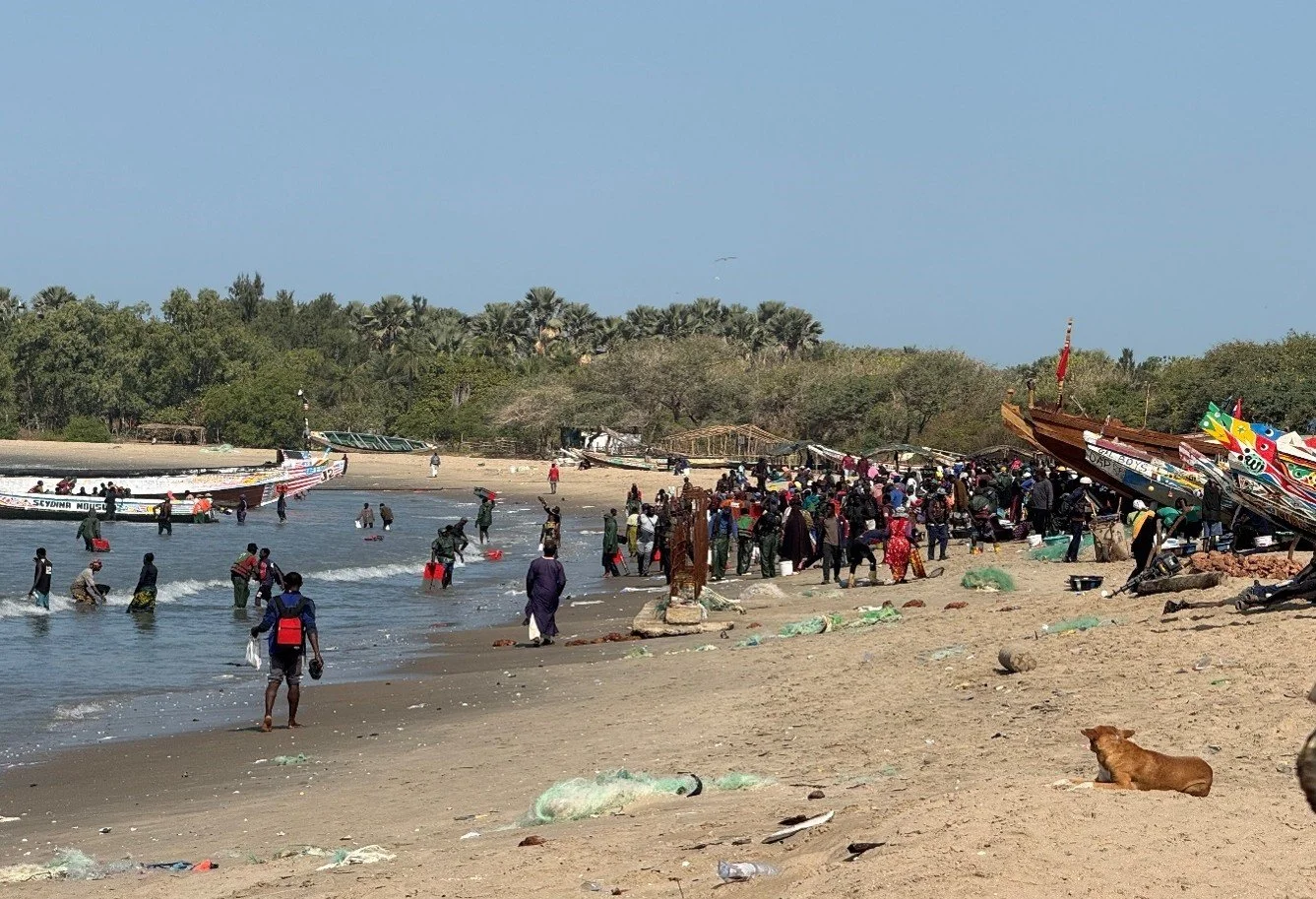
In the coastal towns of Gambia, the day begins at the landing site. Fishing canoes come in, and women wait on the sand to buy, smoke, salt, and sell what the boats bring. Fish is food in The Gambia, but for thousands of women it is also income, school fees and medicine for elderly parents.
For her master's thesis at the Swedish University of Agricultural Sciences, Fatoumatta Dibba spent February and March 2026 in these three coastal towns of Gunjur, Sanyang and Kartong. Through interviews, group discussions, and observation, she asked what happens to women fish traders and processors when illegal industrial trawlers and industrial fishmeal factories compete for the same fish.
The “headache” that won’t go away
Every woman interviewed said the same thing: fish has become hard to get, and it has been getting worse over the past 5 to 10 years. The women discuss the increasing of industrial trawlers which compete with the small artisanal canoes, main providers for their fish trade. The women compare batong, the local word for an industrial trawler, to a headache that refuses to leave.
Artisanal canoes are legally restricted to the waters between two and nine nautical miles from shore. Fishermen and women describe trawlers cutting into this zone, tearing nets and, in one case, a collision that left a fisherman dead. A fisheries expert explained how some foreign-owned vessels register as Gambian: a Gambian citizen is listed as co-owner on paper, which lowers licensing fees and fines.
Scarcity pushes prices up. Women reported that a basket of fish that cost 600 Dalasi (D) five years ago now costs D1,800 to D2,500. According to an interview with an investigative journalist, he mentioned:
“Women didn’t have the buying power. Like I said, the fishmeal paid the fishermen more than the women did. They also paid upfront. The women don't have the money to buy up front. Most of the time they take fish on credit, and then when they sell, they come and give the fisherman his money. But the fishermen don't have the patience for this. So they prefer to go sell it directly to the fishmeal factory who give them higher pay on the spot”
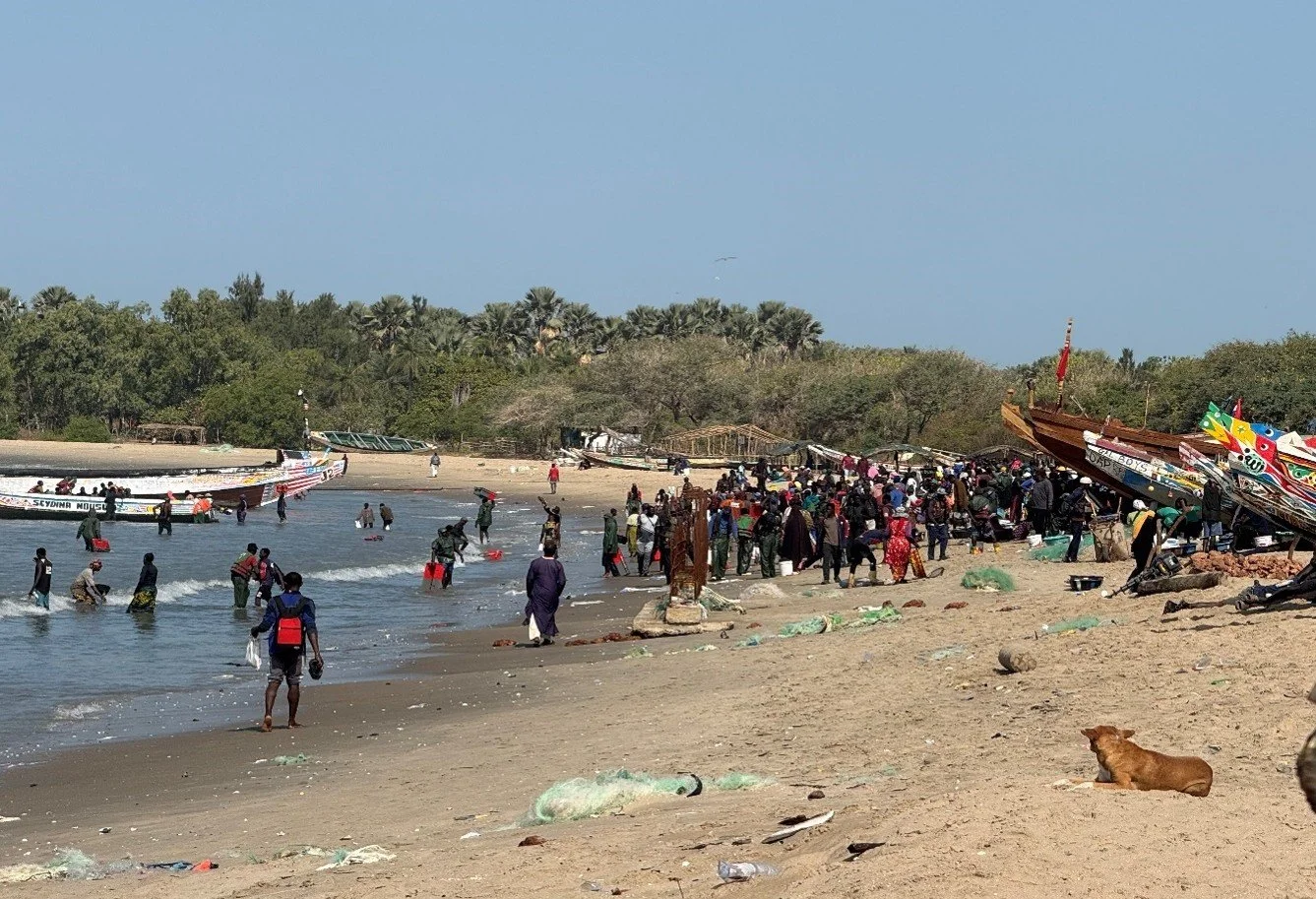
Informal landing site of the golden lead fishmeal factory in Gunjur. Showcasing vibrant interaction between Senegalese fishermen and women fish traders and processors. (Photo credit: Fatoumatta Dibba, taken during fieldwork in Gunjur Date: 21/02/26)
The impact at home
The thesis shows how this problem reaches into the household. Many women said their husbands, often day labourers earning around D300 a day, cannot cover the family’s costs alone, so their fish income help paying for their children school fees, lunch money, electricity and medicine. As earnings shrink, savings vanish, and some women borrow from shop owners or relatives. One female trader described meals that happen “sometimes” and sometimes don’t.
Many women, particularly traders in their fifties and sixties who had worked in fish for decades, have given up and moved into vegetable selling or small food businesses. One former trader, who followed her mother into the trade as a teenager, said that she no longer had the energy to run around looking for fish.
The paradox: the fishmeal factory
In the thesis, Fatoumatta mentioned the most surprising finding is the fishmeal paradox. Chinese-owned fishmeal factories turn tonnes of small pelagic fish, such as bonga and sardinella, into feed for farmed fish that mostly ends up on tables in the global north. They are widely criticised for pollution, overfishing and weakening local food security.
Yet in Gunjur, women said the factory was what kept them working. Its contracted Senegalese fishermen have bigger boats and stronger nets, and they travel farther. Alongside the bonga the factory wants, they also land catfish and ladyfish, the species women smoke and sell. The factory sells a basket of catfish or ladyfish for about D600, against D1,800 to D2,500 from local artisanal fishermen. One female processor said that without the factory, “we would be sitting at home.”
The observation notes show the contrast: the factory’s landing site was lively with negotiation and laughter, while the local fishermen’s side was nearly silent.
The other side of the story matters too. Fisheries officials, a journalist, and local fishermen argued that women are trading long-term security for short-term relief. They said the factory pre-finances the Senegalese fishermen, which ties them to the factory and cuts out women as middlemen, and that its buying power pushed prices up in the first place. The relief also depends on the season, since the factory’s fishermen work only about six months a year. In Sanyang and Kartong, where no similar arrangement exists, women said the factories brought them nothing. But this paradox is import to bring up into discussion, because for some women traders and processors, fishmeal factory helps concentrating the landing of fish, and give their busines a chance to continue.
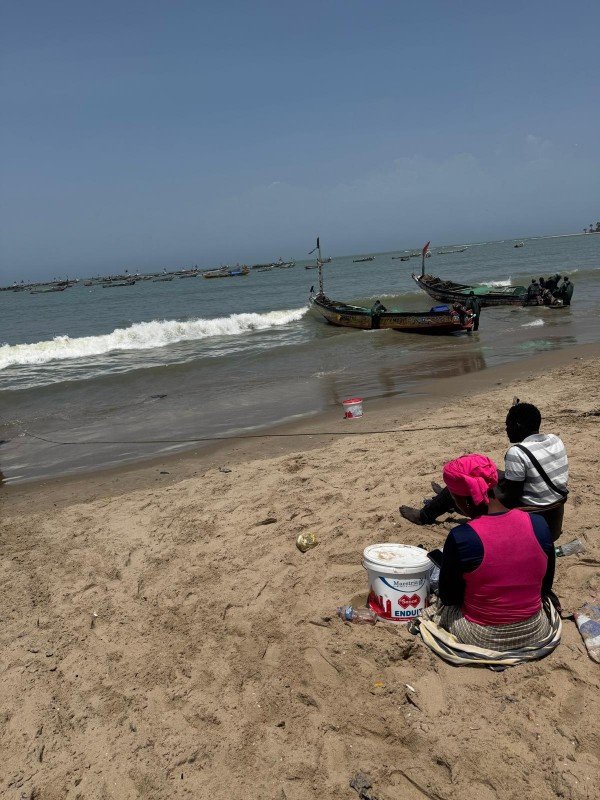
Women traders waited to buy fish on the beach (Photo credit: Fatoumatta Dibba)
Resilience, women’s way
Women are not passive in this story. They have diversified their income with gardening, selling firewood or ice cream, and some travel to the industrial jetty in Banjul, even when they know the trawlers there are part of the problem. As one said, “I have a family to look after.”
Many have also leaned on osusu, traditional rotating savings groups, in which members contribute a small fixed amount, such as D50 or D100 a day, and each member takes the lump sum in turn. One woman used osusu money to buy a refrigerator and start an ice-cream business alongside her fish smoking. Another said the group saved her smoking business when she could no longer afford to buy fish.
Why it matters
The thesis argues that IUU fishing and industrial fishmeal production are not only environmental problems. They are political and deeply gendered questions of social justice. Norms and patriarchal structures keep women out of fishing itself, where fishermen say they are more resilient because they can always catch fish. Women are left to trade and process what others catch, and policies that ignore gender leave them exposed when the supply shrinks.
The conclusion is clear: environmental protection and gender equality must be addressed together. Fisheries policy should treat women as key actors and put them at the centre of decisions about the sea.
'The thesis titled: Negotiating scarcity: the effects of unsustainable fisheries on women’s livelihoods in Gambia by Fatoumatta Dibba, is supervised by Alin Kadfak and Vanessa Jaiteh.
.